Why the Right Accent Chair Matters
An accent chair does more than fill an empty corner. It's the piece that ties a room together, adds personality to a neutral space, and gives you a reason to sit somewhere other than the sofa. Knowing how to choose an accent chair that works — in style, scale, and comfort — is one of the simplest ways to elevate a room.
At Joel's, we see accent chairs as the finishing touch that separates a "nice" room from one that feels intentionally designed. Whether you're furnishing a living room, bedroom, or reading nook, the right chair makes the difference. Here's what to consider before you buy.
How to Size an Accent Chair for Your Space
Scale is everything. An oversized wingback in a small apartment will swallow the room, while a petite slipper chair in a grand living room will disappear entirely.
Quick sizing guidelines:
- Measure first. Note the available floor space, including clearance for walking paths (at least 30 inches around the chair).
- Match seat height. For chairs placed near a sofa, keep the seat height within two inches of the sofa's seat height — typically 16 to 18 inches. Mismatched heights feel awkward and make conversation uncomfortable.
- Consider depth. Standard seat depth runs 18 to 22 inches. If you're tall, aim for the deeper end. If the chair is more decorative than functional, a shallower seat works fine.
- Think about proportion. A chair's visual weight should balance with surrounding furniture. A solid, fully upholstered chair carries more weight than one with exposed legs and an open frame.
Don't forget ceiling height. Rooms with tall ceilings can handle high-backed chairs — they actually help fill the vertical space. In rooms with standard eight-foot ceilings, a lower-profile chair tends to feel more natural.
Popular Accent Chair Styles to Know
Not all accent chairs serve the same purpose. Understanding the main styles helps you narrow the search quickly.
- Wingback chairs — Tall backs with side "wings" that frame the sitter. Classic and commanding, they work beautifully in formal living rooms and reading corners. A wingback in a rich velvet or leather adds instant sophistication.
- Club chairs — Deep-seated and wide-armed, club chairs are built for comfort. They're slightly more casual than wingbacks and pair well with a side table and reading lamp.
- Slipper chairs — Armless and low-profile, slipper chairs are ideal for smaller spaces or as a pair flanking a console table. They're versatile and unobtrusive.
- Swivel chairs — Modern and functional, swivel chairs work well in open-concept spaces where you might want to turn between a conversation area and a view.
- Lounge chairs — Wider and more relaxed, lounge chairs are designed for sinking in. They suit bedrooms, dens, and any space where comfort takes priority.
The best accent chair isn't the trendiest one — it's the one that fits your room, your body, and your daily life.
Choosing the Best Fabric for Your Lifestyle
Fabric choice determines how a chair looks, feels, and holds up over time. Be honest about how the chair will be used before falling for a delicate material.
For high-traffic rooms and families:
- Performance fabrics — Engineered to resist stains, fading, and wear. Many look and feel indistinguishable from natural fabrics but clean up with a damp cloth.
- Leather — Ages beautifully and wipes clean easily. Full-grain leather develops a rich patina over years of use.
- Bouclé and chenille — Textured, cozy, and surprisingly durable when made from synthetic blends.
For low-traffic or decorative use:
- Velvet — Luxurious and eye-catching. Best for rooms that see lighter use, like a formal sitting area or bedroom.
- Linen — Natural and relaxed, though it wrinkles and stains more readily. Slipcovers help extend its life.
- Silk blends — Stunning but delicate. Reserve for chairs that are more admired than sat in.
A note on color: Neutral chairs (cream, charcoal, navy) offer longevity and flexibility. If you want to make a statement, a single bold chair in an otherwise neutral room creates impact without committing your entire palette to a trend.
Accent Chair Placement and Pairing Tips
Where you place an accent chair matters as much as which chair you choose. Good placement creates flow, encourages conversation, and makes a room feel complete.
Living room pairings:
- Flanking a fireplace — Two matching accent chairs facing each other across a hearth create a classic, symmetrical arrangement.
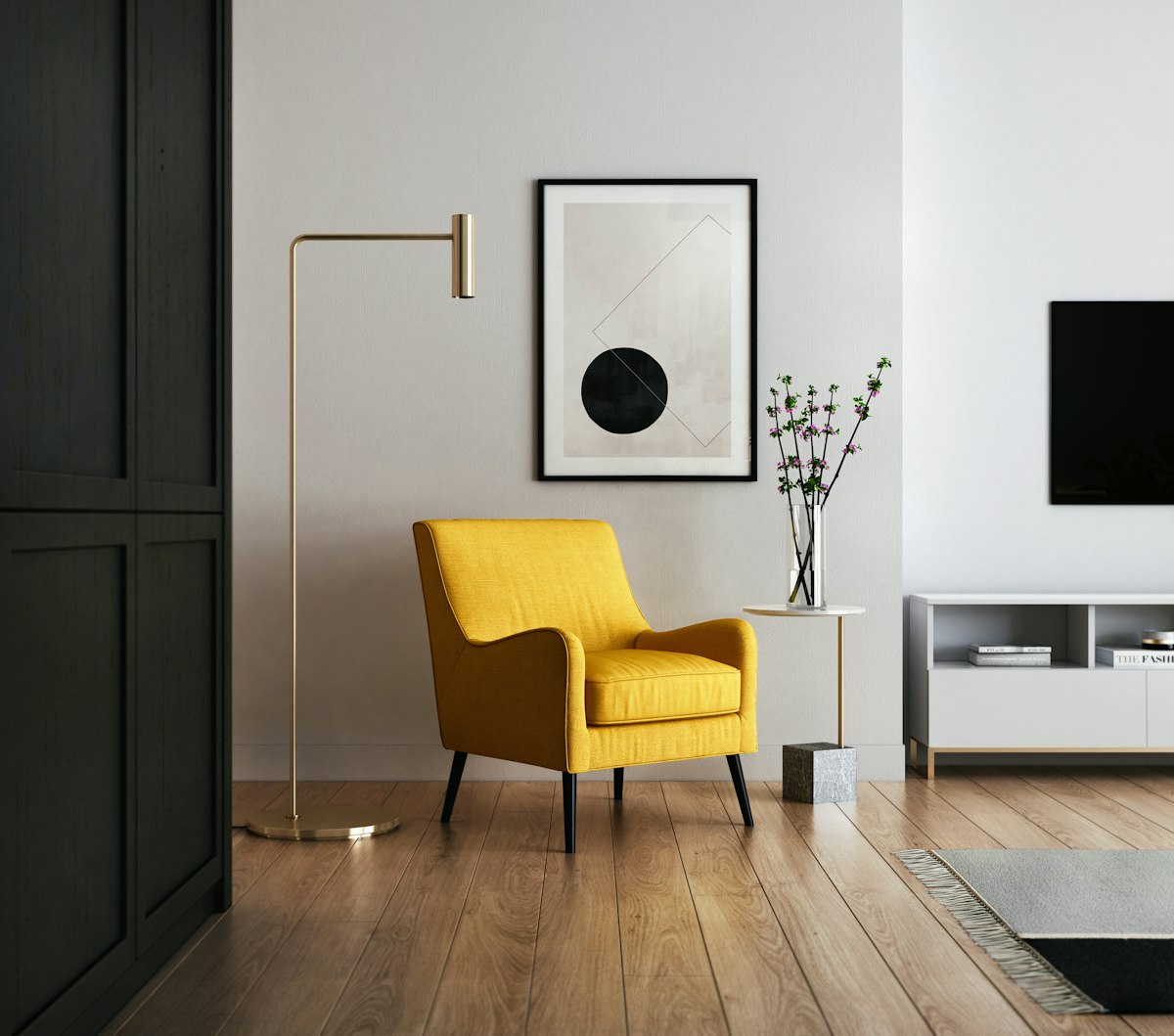
- Angled beside a sofa — Place the chair at a slight angle to the sofa, creating an L-shaped conversation area. Add a small side table between them.
- Across from the sofa — A single statement chair directly across from the sofa anchors the opposite side of a coffee table and balances the room.
Other rooms:
- Bedroom — A chair near a window or in a corner with a throw blanket becomes an instant retreat.
- Entryway — A compact chair or pair of slipper chairs beside a console table makes a welcoming first impression.
- Home office — A comfortable accent chair gives you an alternative to the desk chair for reading or thinking.
When pairing with your sofa, the accent chair doesn't need to match — it should complement. If your sofa is a solid neutral, the chair can introduce pattern or color. If your sofa has strong lines, try a chair with softer curves for contrast.
What to Look for in Quality Construction
A beautiful chair that falls apart in two years is no investment. Here's how to assess quality before you buy.
Frame: Hardwood frames (oak, maple, ash) outlast softwood and engineered alternatives. Joints should be doweled, screwed, or use mortise-and-tenon construction — never just stapled or glued.
Cushioning: High-density foam wrapped in a layer of down or polyester fiber gives the best balance of support and softness. All-foam seats tend to flatten over time; all-down seats require constant fluffing.
Springs: Eight-way hand-tied springs are the gold standard for seat support. Sinuous (S-shaped) springs are common in mid-range chairs and perform well, though they don't distribute weight as evenly.
Upholstery details: Look for patterns that are centered and matched at seams, welting that's straight and even, and fabric that's taut without pulling. These details signal careful workmanship.
At Joel's, every piece in our accent chair collection meets these benchmarks. We work directly with manufacturers who share our standards for materials and construction.
Start With a Conversation
Choosing an accent chair is personal — it depends on your space, your style, and how you actually live in your home. That's why we always recommend starting with a conversation rather than a catalog.
Our design team can help you narrow down styles, select fabrics, and even explore custom options if you have something specific in mind. Whether you're adding a single chair or furnishing an entire room, we're here to help you find pieces that feel right and last.
Get in touch to schedule a free design consultation, or browse our full collection to see what's available now.